Background
The Republic of Moldova is going through a demographic transition characterized by a continuous ageing process, low fertility and out migration, especially of young population and of economically active population. To address these demographic challenges, the Government of the Republic of Moldova committed to develop evidence-based and people centered policies.
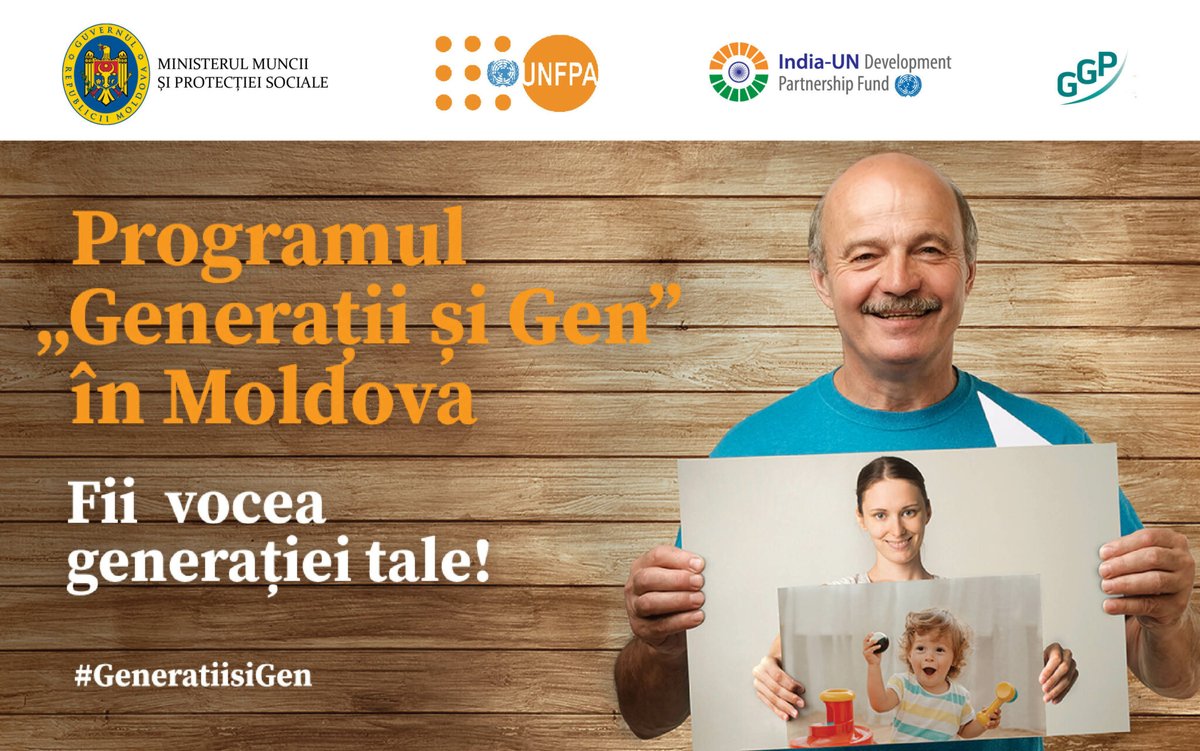
In this context, in 2018 the Ministry of Labour and Social Protection (MoLSP) in partnership with the United Nations Population Fund (UNFPA) launched the “Generations and Gender Programme in the Republic of Moldova” (GGP). The Program aims to provide high quality disaggregated data on demographic and societal changes and factors that influence people’s decisions and choices about their future.
GGP is part of the Demographic Resilience Programme that aims to support and build the capacity of Moldovan Government in developing population and social policies and programmes to respond to demographic change, strengthen human capital and shape a prosperous future.
About the survey
The Generations and Gender Survey is the first and most comprehensive demographic survey conducted in the Republic of Moldova in 2020 as part of the Generations and Gender Programme. This study monitored demographic trends, behavioral and value system changes, intention to create a family, desired number of children, changes in family structure and others.
More than 10,000 people aged 15-79 years old from 153 localities of the country (except the territory of the Left-Bank of Dniester river) participated in the survey. The data collection process step by step can be accessed here.
The sample frame was drawn by the National Bureau of Statistics by using for the first time the GIS technologies. This innovation allowed to collect data in a digital format that contributed to the modernization of statistical system of the Republic of Moldova.
The GGS microdata are opened and can be accessed free of change by national and international researchers, representatives of CSOs, public authorities, academia and mass media. The GGS database can be requested from the GGP Data Portal or visualized via an interactive platform.
Strategic partners
The Generations and Gender Survey is implemented by the Ministry of Labour and Social Protection (MoLSP) in partnership with the United Nations Population Fund (UNFPA), the National Bureau of Statistics (NBS) and the Netherland Interdisciplinary Demographic Institute (NIDI).
The survey was conducted with the financial support of the Ministry of Labour and Social Protection, India-UN Development Partnership Fund and UNFPA Moldova.
Targeted analysis and policy documents
The GGS data are currently used by the authorities to identify policy measures to transform the demographic crisis into an opportunity in order to strengthening the demographic resilience of the country. Targeted in-depth analyses have been developed and officially launched within a series of Public Debates to advocate for policy interventions needed to improve the quality of life in the Republic of Moldova.
Final GGS Reports
- Summary of the Generations and Gender Survey
- Teoria Schimbării pentru Reziliența Demografică în Republica Moldova
- Active Ageing Index in the Republic of Moldova 2020
- Factorii care influențează fertilitatea de-a lungul generațiilor
- Targeting groups of women to reduce unmet family planning need
- Explaining fertility intentions in the Republic of Moldova
- How do we foster equitable engagement of parents in upbringing and care of children
- Expanding the working arrangements
- Policies for the desired fertility: National Creche Fund to support parents
Multimedia & visibility materials
A series of communication materials have been developed to present the main findings of the survey in user-friendly language, ensuring the results are accessible to the general public.
Personal stories:
- Intentions to emigrate
- Infertility issues
- Desired number of children
- Distribution of household responsibilities between partners
- Intergenerational dialogue
Informative short videos:
- Intentions to emigrate
- Infertility issues
- Desired number of children
- Distribution of household responsibilities
- Relations between generations
- Work-life balance
- Relations between partners
- Use of contraception
- Feeling of loneliness
- Gender stereotypes
Infographics: