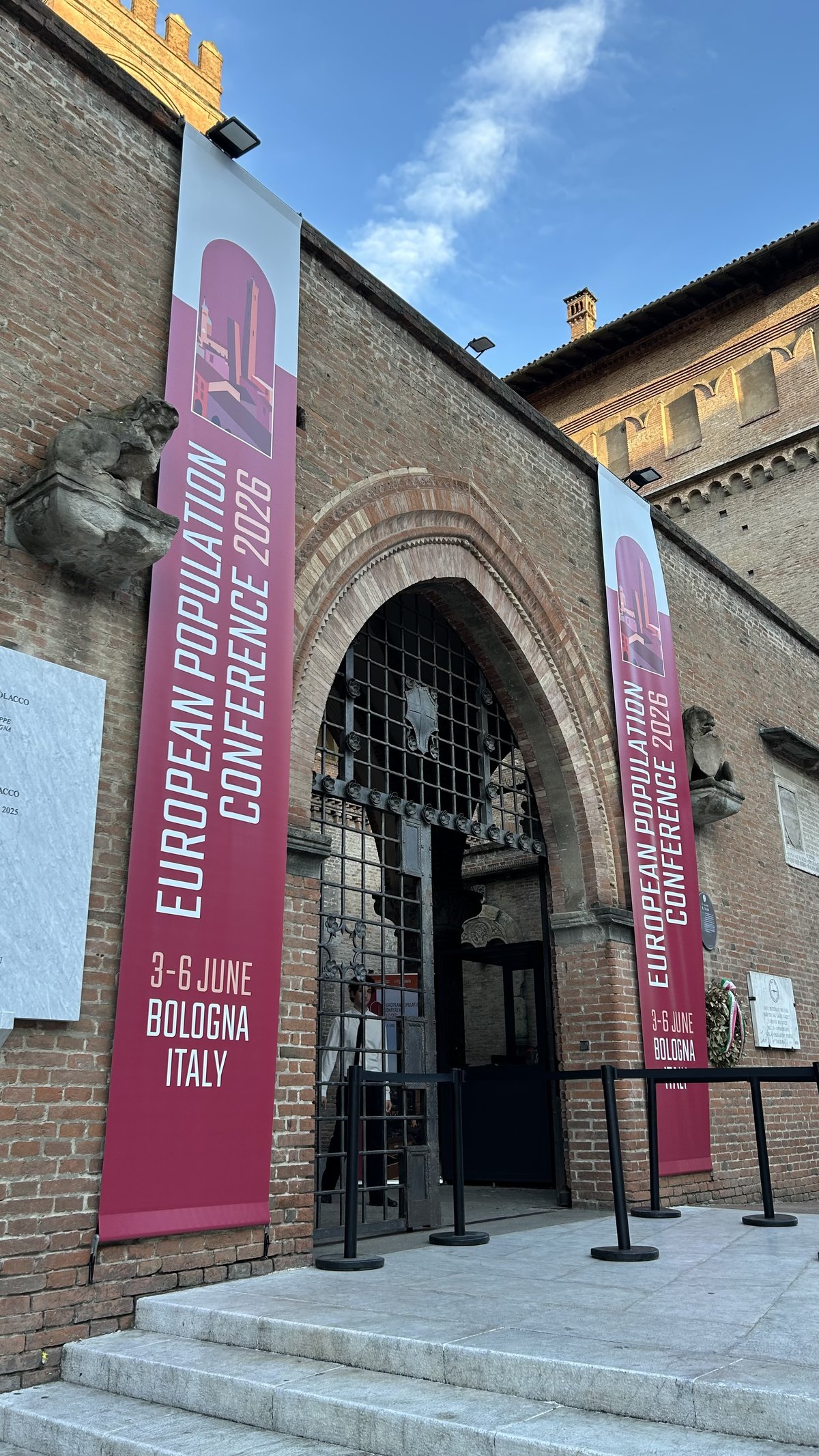
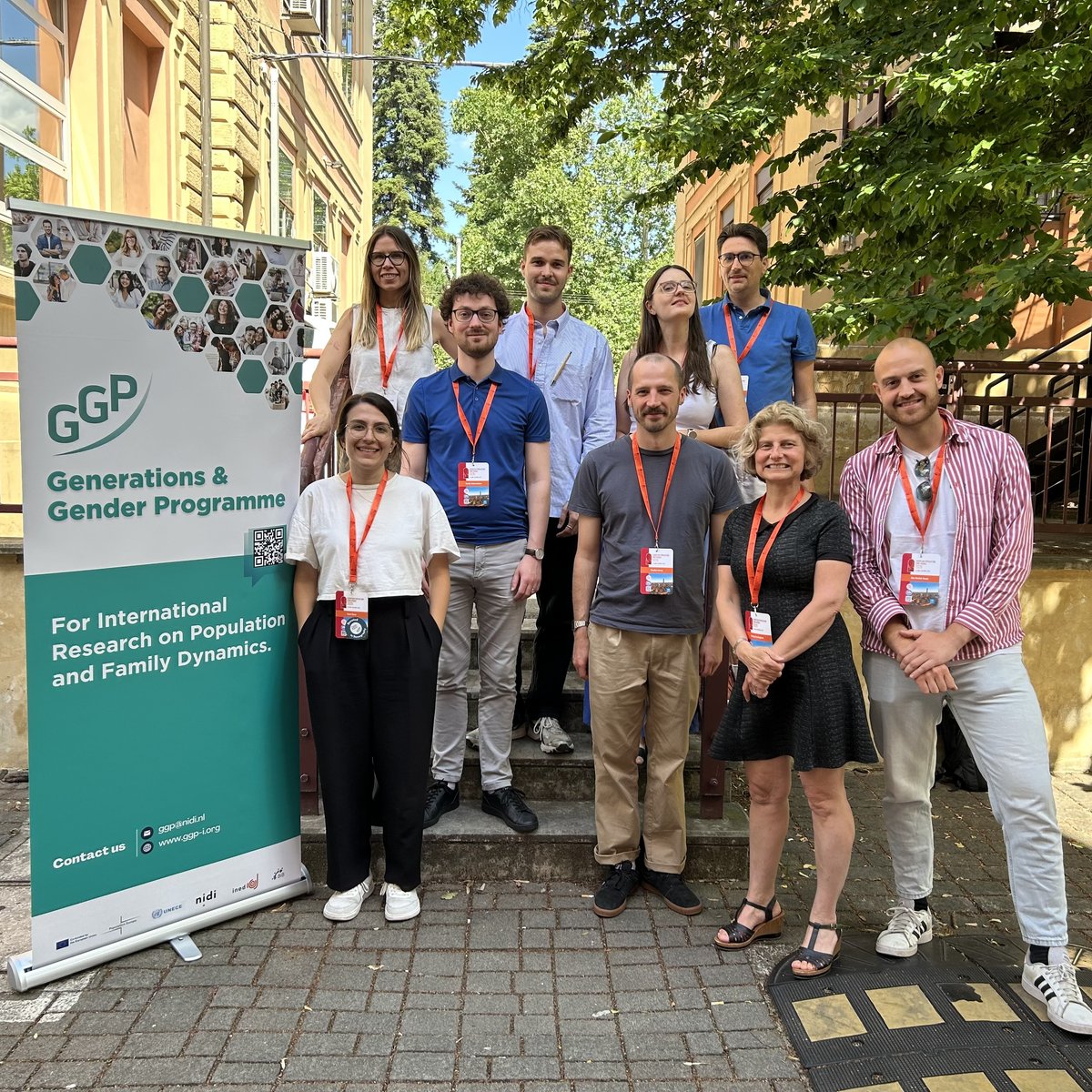
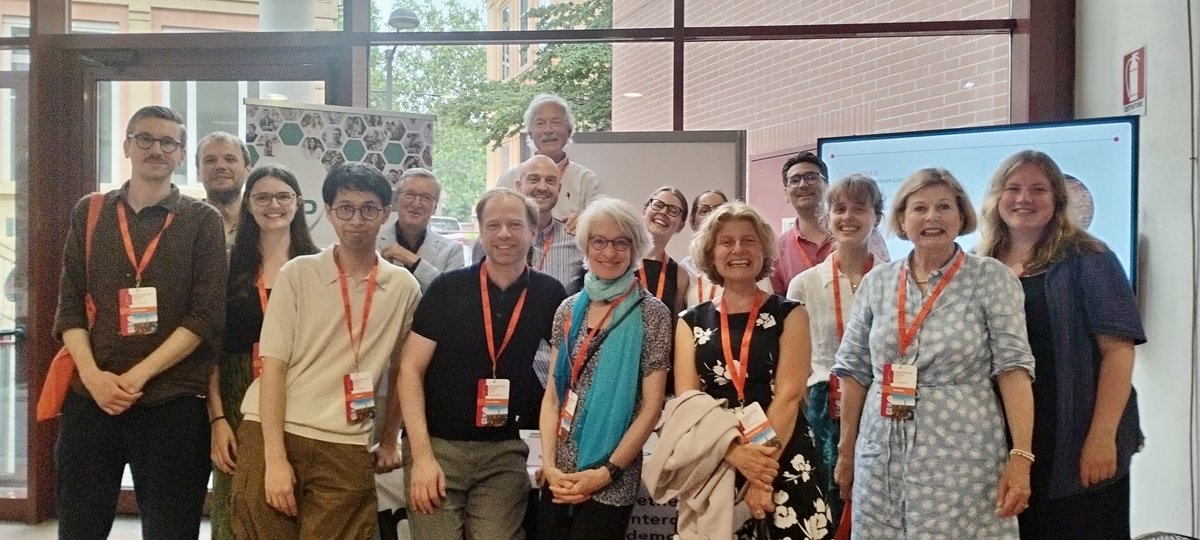
The European Population Conference (EPC) 2026 brought together researchers from across the world in Bologna from 3-6 June. For the Generations and Gender Programme (GGP), it was four days of conversation, collaboration, and a powerful reminder of the many ways GGP data continue to shape contemporary demographic research.
Across the conference, at least 55 papers and posters drew on GGP resources, including the Generations and Gender Survey (GGS), Harmonized Histories, and the SoGreen Module. Research topics spanned fertility trends, family formation, LGBTQIA+ life-course transitions, fatherhood and parental leave, migration, gender and health, and fertility responses to war and crisis, among many others.
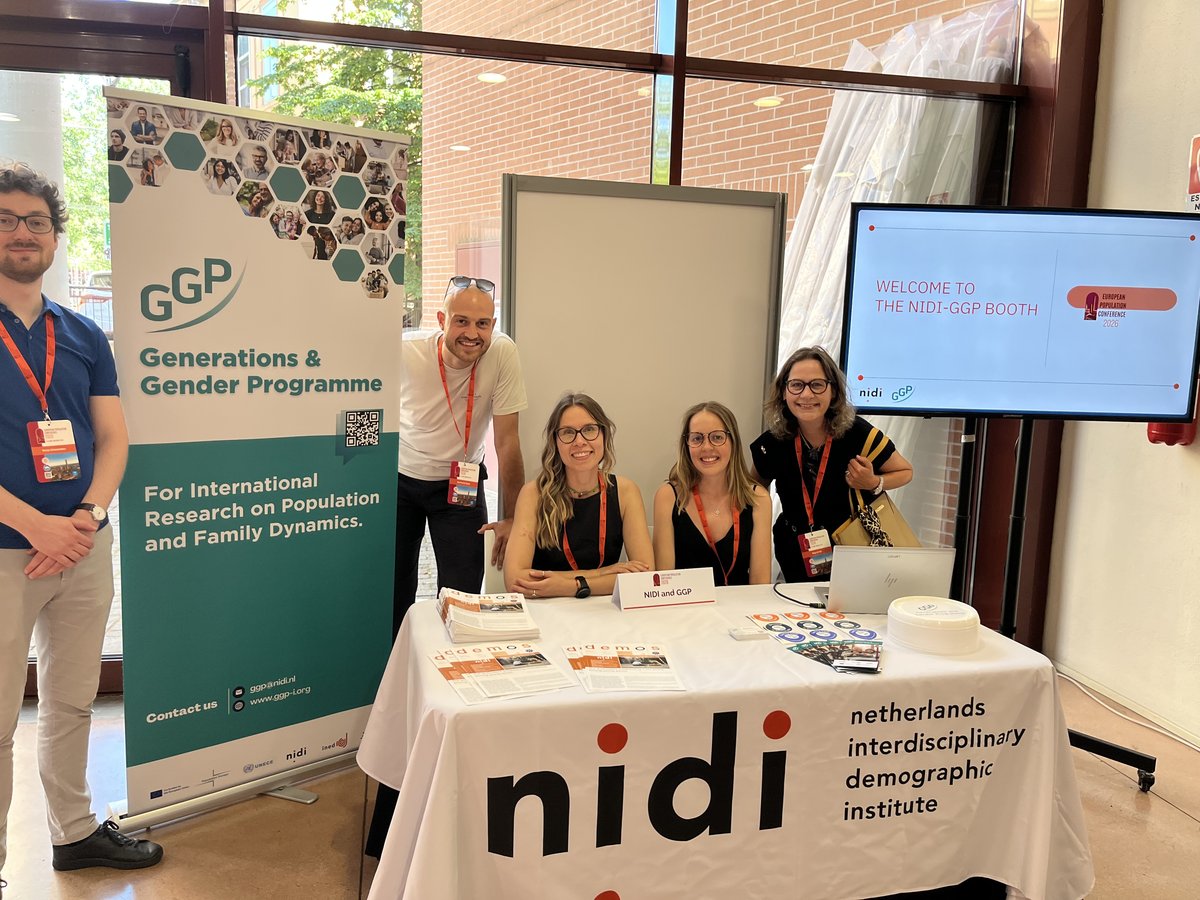
Throughout the conference, the GGP Central Hub team hosted a booth that quickly became a gathering place for researchers. It provided opportunities to reconnect with long-time collaborators, exchange ideas, and introduce new users to the possibilities offered by GGP data.
On Thursday, GGP Director Anne Gauthier contributed to a discussion on the UNFPA Demographic Futures Survey, which covers 74 countries and offers a rich snapshot of family formation, fertility intentions, and the aspirations of younger generations worldwide. Thursday's poster session also featured two GGP-related presentations: Esma Savas presented the SoGreen Module and its exploration of the social dimensions of the green transition, while Martijn Schoenmakers shared findings on mixed-mode survey administration in GGS Round II.
Friday's highlight was the GGP-hosted session "Advances in Population Research: Cutting-Edge Family Research with GGP Data", which drew together some of the most innovative research using GGP data and sparked rich discussions on family dynamics and social policy. The day concluded with poster presentations by Konstantin Schmandt on new estimates of contraceptive use and survey mode effects, and Yuliya Kazakova on research infrastructure supporting the European Union's Next Generation agenda.
On Saturday morning, Alex Kortink Boada presented research on survey mode effects and measurement challenges before the conference came to a close at the closing ceremony.
EPC 2026 was a wonderful reminder of the vibrant community that has formed around longitudinal demographic research. We are grateful to the University of Bologna and the European Association for Population Studies for hosting such a stimulating event, and to everyone who made the week a success.
A special thank you goes to Yuri Pettinicchi, Yuliya Kazakova, and Fee Van den Eynde, who helped organise and run the GGP-NIDI booth throughout the conference.